

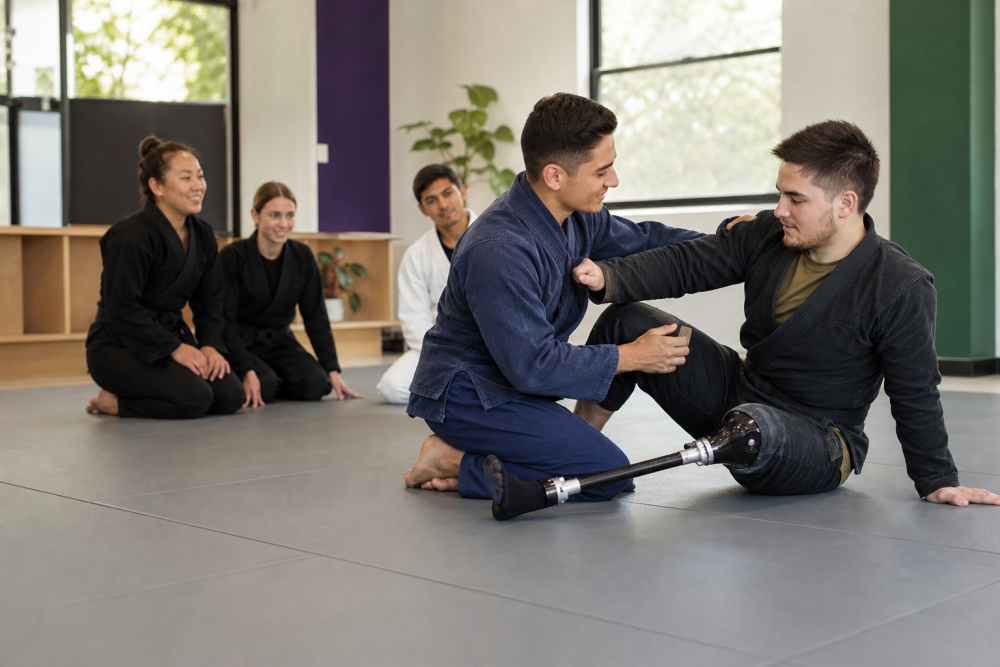
Martial arts can offer much more than exercise. In the right environment, training can provide structure, achievable challenges, social connection and a strong sense of progress. Brazilian Jiu-Jitsu (BJJ), judo, karate, taekwondo and other adapted martial arts may all be made more accessible for people with different abilities and support needs.
Research into martial arts and mental health is encouraging, but it is not a promise of individual results. Training should complement—not replace—medical, psychological or allied-health support when those services are needed.
Why martial arts can be a good fit
Martial arts combines movement, attention, repetition and interaction. Sessions often follow a predictable rhythm: warm-up, learn a skill, practise it safely and reflect on progress. That structure can make participation feel manageable and rewarding.
- Clear routines and step-by-step learning
- Progress that can be recognised through skills or grades
- Opportunities to practise focus and emotional regulation
- Physical activity with a strong social component
- Techniques that can be adapted to the individual
Confidence through gradual progress
Learning a new movement can feel difficult at first. With patient coaching, repetition and encouragement, participants can experience progress they can see and feel. Completing a drill, remembering a sequence or becoming more comfortable with a training partner can strengthen self-belief.
The aim is not to compare one person with everyone else. A good program recognises individual starting points and celebrates meaningful personal progress.
What makes Brazilian Jiu-Jitsu different?
BJJ is sometimes described as physical problem-solving. Participants learn how position, timing and technique can matter as much as speed or strength. Training can encourage patience, planning, body awareness and staying calm while working through a challenge.
Because BJJ involves close physical contact, it will not suit everyone. Consent, communication, hygiene, appropriate matching and the ability to pause or opt out are essential. Adapted sessions may use solo drills, controlled partner work or technique practice without live sparring.
Connection, belonging and mental wellbeing
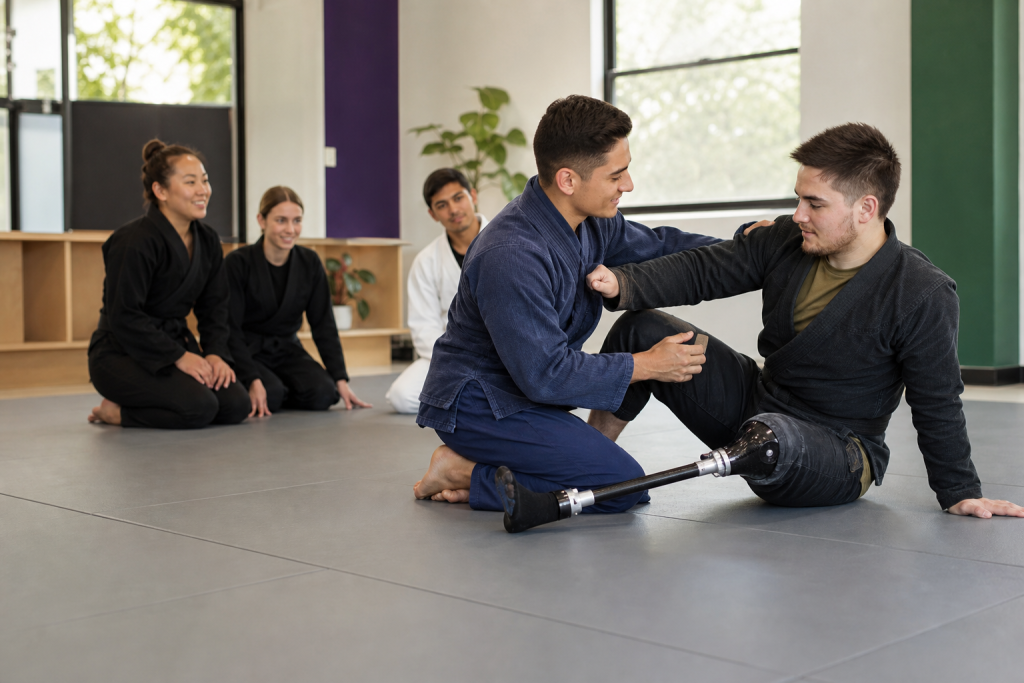
A welcoming club can create a regular place to see familiar people, work toward shared goals and feel part of a community. Systematic reviews have reported promising associations between martial arts participation and areas such as wellbeing, self-regulation, communication and social-emotional functioning, including in some young people with disability. However, study quality and results vary, and more high-quality research is needed—particularly for BJJ itself.
The coaching environment matters. Respectful instructors, suitable supports and a culture that values safety over toughness are more important than the style of martial art alone.
Choosing a safe and inclusive program
Before starting, speak with the participant, family or support team about preferences, sensory needs, mobility, communication and health considerations. Where appropriate, seek advice from a qualified health professional.
- Visit or observe a class before joining
- Ask how techniques and equipment can be adapted
- Check instructor qualifications, screening and safeguarding practices
- Make sure consent and personal boundaries are respected
- Start slowly and review how the participant feels after sessions
- Choose progress, enjoyment and belonging over pressure to compete
Support to get involved
The Big Care can explore suitable sport and community-participation support built around individual interests. That may include help finding an appropriate program, attending sessions, building routines and developing confidence over time.
This article provides general information only and is not medical advice. Martial arts involves physical contact and risk of injury. Suitability should be considered individually.

