

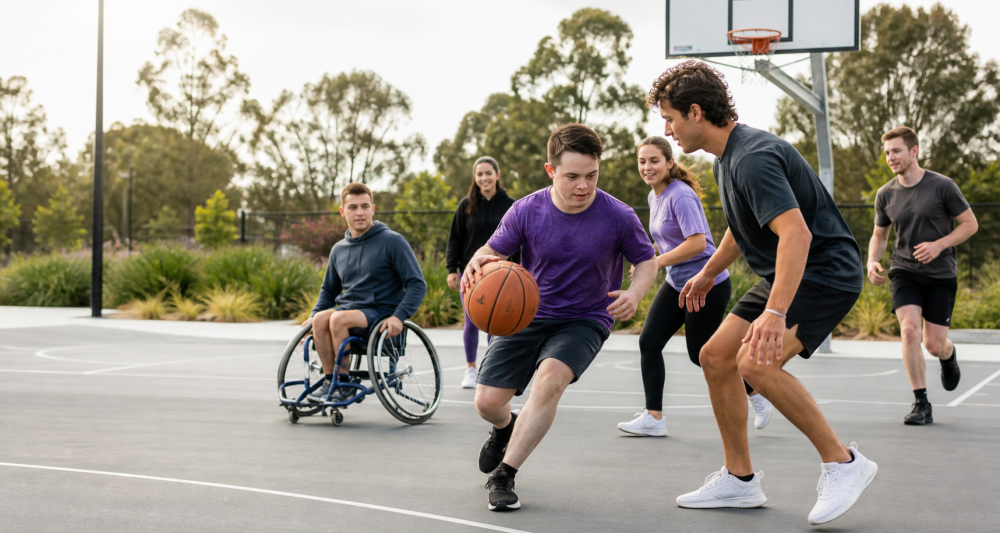
Sport can create a powerful reason to get moving, leave the house, meet people and keep working toward a goal. For people with disability, the right activity can support confidence, connection and practical independence while still being something enjoyable in its own right.
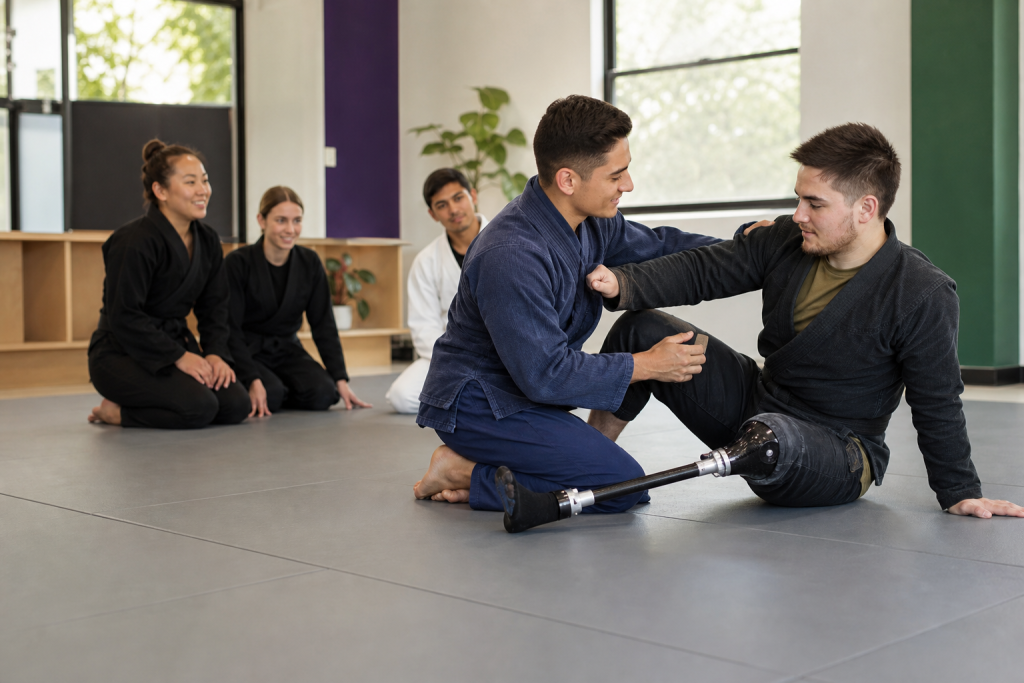
There is no single “best” sport. Basketball, football, swimming, gym training, running, boxing fitness, martial arts and outdoor movement can all work when the activity, environment and level of support fit the individual.
Confidence grows through doing
Confidence is difficult to build through reassurance alone. Sport gives people opportunities to practise, make mistakes, adjust and notice improvement. Learning a movement, attending consistently or joining a game can become evidence that a difficult goal is possible.
Progress might mean lifting a little more, remembering a drill, communicating with a teammate, trying a new venue or simply staying for the whole session.
Shared activity makes connection easier
Conversation can feel less pressured when people are doing something together. Sport provides a shared focus, natural moments for encouragement and repeated contact with familiar people.
Individual sessions can build comfort before joining a group. Small groups and team sports can then create opportunities to practise communication, cooperation, taking turns and handling wins or setbacks.
Routines can support independence
Regular activity involves more than the session itself. A participant may practise preparing their bag, checking a timetable, travelling to the venue, managing money, communicating with staff and recovering afterwards.
These are real-life skills. A mentor or support worker can break the routine into manageable steps, gradually reduce assistance where appropriate and help the participant take greater ownership.
The environment matters
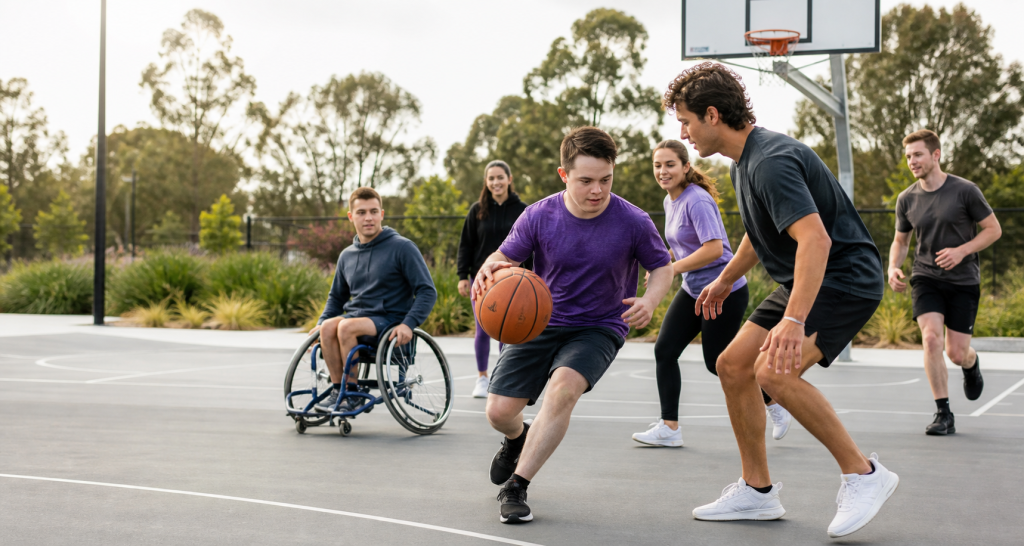
An inclusive program is not defined only by whether it accepts people with disability. The coach, venue, group culture and willingness to adapt all influence whether someone feels safe and able to participate.
- Are instructions clear and available in different formats?
- Can intensity, rules or equipment be adjusted?
- Is the venue physically and sensory accessible?
- Are consent, privacy and personal boundaries respected?
- Does the coach value participation and progress—not just performance?
Start with interests, not assumptions
A person is more likely to continue when the activity connects with something they genuinely enjoy. Some people want competition and measurable performance. Others prefer movement, routine, friendship, stress relief or time with a mentor.
It can help to observe a session, try a low-pressure introduction and review what felt good or difficult afterwards. Changing the sport, coach, schedule or support approach is not failure—it is part of finding the right fit.
How The Big Care can help
The Big Care builds sport and fitness support around individual interests and goals. Support may involve one-to-one gym sessions, basketball, swimming, boxing fitness, martial arts, outdoor activities or help joining a suitable community program.
This article provides general information only. Physical activity involves risk, and individual health, accessibility and support needs should be considered before starting a program.

